
Altenpflege in Germany: Elder-Care Nursing Roles, Language Level and Route for Indian Candidates
Elder care is one of the biggest doors into German nursing. Here is how the roles differ, which German level you need and which route fits your background.
Search for nursing jobs in Germany and you will keep meeting the word Altenpflege, which means care for older people. Nursing homes, day-care centres and home-care services all hire for it. But the job titles have changed in recent years, and the rules are different for a trained Indian nurse than for a school-leaver who wants to start with an Ausbildung.
This guide explains Altenpflege in Germany in plain language: the roles, the German level, the two main routes for Indian candidates and the mistakes that slow people down. For the wider nursing picture, start with why Germany is a strong choice for Indian nurses.
What Does Altenpflege Mean in Germany Today?
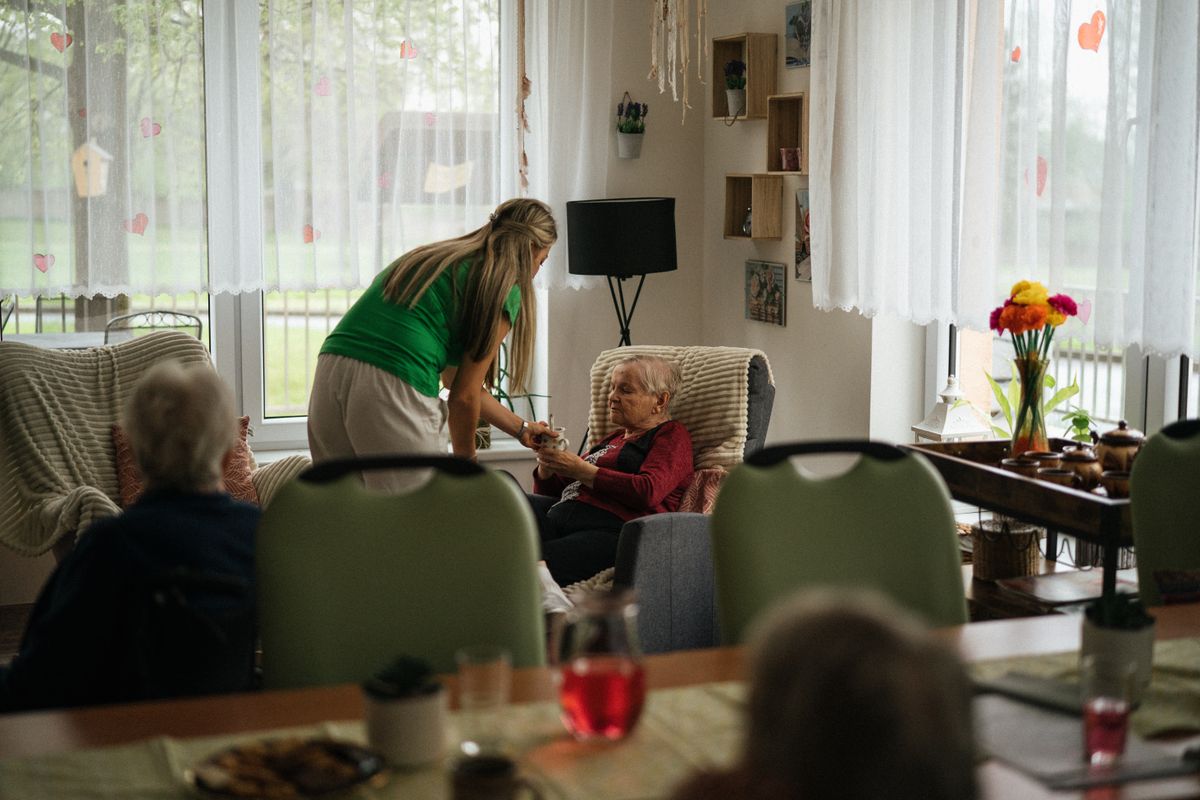
Altenpflege is care for older people who need help with health, daily life and safety. It happens in care homes, in people’s own homes through outpatient services and in day-care settings. Because Germany’s population is ageing, employers in this field regularly look for trained staff.
One change matters for you. According to Make it in Germany, nursing training now begins with a general programme for the first two years. Before the third year, trainees choose to continue as a generalist (Pflegefachfrau or Pflegefachmann), or to specialise in long-term care or paediatric care. Choosing long-term care leads to the qualification Altenpfleger/in.
The Main Elder-Care Roles Compared
| Role | What it is | Typical entry |
|---|---|---|
| Pflegefachfrau / Pflegefachmann | Generalist nurse, qualified to work with all age groups, including elder care | 3-year Ausbildung, or recognition of a foreign nursing qualification |
| Altenpfleger/in | Nurse who chose the long-term-care specialisation in the last third of training | Same 3-year Ausbildung with elder-care focus. For foreign nurses, possible on request if the foreign training corresponds* |
| Pflegefachassistent/in | New assistant-level nursing profession, usually 18 months full-time | Training starts 1 January 2027; generally a Hauptschulabschluss |
| Helper roles (Pflegehelfer/in) | Assistant roles under state rules, such as Gesundheits- und Krankenpflegehelfer/in | State-specific. Some authorities can grant helper recognition as an interim step* |
*Based on a Regierungspräsidium Stuttgart FAQ on recognition (April 2024). Other states may handle this differently, so confirm with your own authority.
Which German Level Do You Need?
There is no single answer, because the level depends on what you are applying for and where. Here is what the official sources we read say.
- Nursing Ausbildung: Make it in Germany says the requirement is B1 or B2, depending on the state.
- Visa for training or adaptation: The Stuttgart authority’s FAQ says it assumes B1 is needed for a residence permit under § 16d of the Residence Act.
- Practising as a nurse after recognition: The same FAQ says B2 is needed, and it must be shown when the certificate is issued, not necessarily at the start.
- Triple Win (India): The Federal Employment Agency asks for at least B1 at the time of the visa application, with a B2 exam later in Germany.
Two Routes for Indian Candidates
🩹 Route A: You are already a nurse
- You hold a GNM diploma, a B.Sc Nursing degree or similar.
- You apply for recognition of that qualification in Germany.
- You may need an adaptation course or a knowledge exam.
- B2 German is needed to practise.
🎓 Route B: You are starting out
- You apply for a three-year nursing Ausbildung.
- You study the general programme for two years.
- You can choose the elder-care focus in the final third.
- German level is B1 or B2 depending on the state.
Route B is covered in depth in our guide to nursing Ausbildung in Germany from A1 to placement. You can also read the general Ausbildung eligibility and salary guide.
Make it in Germany lists a school requirement of a medium-level school leaving certificate, plus a health certificate and a police clearance. Whether your Indian schooling meets the school requirement is decided by the training provider and authorities, so ask early.
The Triple Win Programme for Indian Nurses
The Federal Employment Agency runs the Triple Win programme for India, a government-backed way to recruit nurses.
- Who can apply: graduates of an accredited Indian nursing institution with a GNM diploma, a B.Sc (Basic) in Nursing or an Indian nurse registration certificate, aged 18 or over.
- Language: a German course from A1 to B1, held in Thiruvananthapuram, Kerala. B1 must be proven at the time of the visa application.
- Cost: the page says placement, language and technical preparation and integration support are free for applicants.
- Recognition: expected within 12 months of starting work. The permit changes once nurses pass recognition and the B2 exam in Germany.
- Employers: the page names hospitals and elderly care homes among the employers.
How Recognition of Your Nursing Qualification Works
The Stuttgart authority’s published FAQ gives a clear picture of the process in Baden-Württemberg. Other states follow the same federal law but may differ in detail.
- Apply for recognition. You need permission to use the title Pflegefachfrau or Pflegefachmann before you can work as a nurse.
- Wait for the decision. With complete documents the authority must generally decide within four months, and often faster.
- Close the gaps, if any. You choose between an adaptation course, which averages 8 to 11 months, or a knowledge exam with an oral and a practical part.
- Show B2 German. It must be proven when the certificate is issued.
The same FAQ adds that the Altenpflege title can be granted on request, but only if the foreign training corresponds to the German elder-care training. Otherwise recognition is limited to the general Pflegefachfrau or Pflegefachmann title. It also says there is no official positive list of countries, so each application is judged individually.
New in 2027: The Pflegefachassistenz Training
Germany has created a new nationwide assistant-level profession. According to the federal family ministry, the Bundesrat approved the law on 17 October 2025.
- Training starts on 1 January 2027 and usually lasts 18 months full-time.
- The usual entry requirement is a Hauptschulabschluss, though a positive assessment by the training school can also open the door.
- Trainees receive an appropriate training allowance.
The government pages we read did not state a language level for this training, so ask the training school directly. Treat it as a possible stepping stone, not a shortcut, because many Indian candidates still aim for the full nursing qualification.
Mistakes to Avoid
⚠️ Common mistakes
- Assuming one German level applies in every state.
- Treating B1 for the visa as enough to practise. B2 is needed for that.
- Expecting the Altenpflege title automatically after recognition.
- Starting document collection without checking the authority’s list.
- Paying an agent for a promise instead of reading the official page.
✅ Better habits
- Confirm the target state’s rules before choosing an exam.
- Plan German to B2 from day one, even if B1 opens the first door.
- Ask whether your foreign training corresponds to elder-care training.
- Keep certified copies and translations ready early.
- Compare official programmes with any private offer.
Your Step-by-Step Plan
- Decide your route: recognition of an existing nursing qualification or a new Ausbildung.
- Start German now. Use our A2 study plan and aim for B1 first, then B2.
- Check the official page of your target state or programme for language level and documents.
- Prepare your certificates, transcripts and registration documents, plus translations.
- Apply, track the decision and plan for an adaptation course or exam if required.

Looking further ahead? Once you are settled, our guide to permanent residence in Germany for Indians explains the longer path. Health-sector learners can also read about physiotherapy recognition in Germany.
Frequently Asked Questions
What is Altenpflege in Germany?
Altenpflege is the care of older people in care homes, day-care settings and at home. In today’s training system it is a specialisation you can choose in the last third of the nursing Ausbildung, leading to the qualification Altenpfleger/in.
Which German level do I need for elder-care nursing?
For the nursing Ausbildung, Make it in Germany says B1 or B2 depending on the state. To practise as a recognised nurse, the Stuttgart authority says B2 is needed. For the Triple Win programme, B1 is required at the visa stage and a B2 exam follows in Germany.
Can an Indian GNM or B.Sc nurse work in elder care in Germany?
Yes, once the qualification is recognised and you have the required German. You may have to complete an adaptation course or a knowledge exam first. Whether you receive the Altenpflege title or the general Pflegefachfrau or Pflegefachmann title depends on how closely your training corresponds.
What is the Pflegefachassistenz training?
It is a new nationwide assistant-level nursing training that starts on 1 January 2027 and usually lasts 18 months. The usual entry requirement is a Hauptschulabschluss.
Is the Triple Win programme free for nurses?
The programme page says placement, language and technical preparation and integration support are free for applicants, and that the programme covers the medical examination and vaccination costs. Confirm current terms on the official page.
How long does recognition take?
The Stuttgart authority says it generally decides within four months once documents are complete. If an adaptation course is needed, it averages 8 to 11 months. Timelines differ by state and case.
Planning nursing in Germany?
Lingua Nest runs small-batch German training and honest counselling for nurses and Ausbildung applicants. We help you plan your language level and next steps. We do not promise visas or jobs, only solid preparation.
Book Free Counselling WhatsApp UsDisclaimer: Recognition rules, language levels and training laws differ by state and change over time. This article reflects official pages we read in October 2026, and some details come from one state authority. Always confirm current requirements with the authority, programme or employer that will process your file. This is not legal or immigration advice.