
TEF Canada or TCF Canada? Discover which exam suits your immigration goals. Expert tips to prepare for TEF Canada & boost your CLB score!
If you’re planning to immigrate to Canada and wondering whether to take TEF Canada or TCF Canada, you’re not alone. These two French language proficiency exams can significantly impact your Express Entry points and Provincial Nominee Program applications. Understanding the difference between these tests is crucial for making an informed decision that aligns with your immigration goals.
Both the Test d’évaluation de Français (TEF) Canada and the Test de Connaissance du Français (TCF) Canada are officially recognized by Immigration, Refugees and Citizenship Canada (IRCC). However, they differ in structure, difficulty level, and scoring systems. This comprehensive guide will help you understand TEF vs TCF differences and choose the exam that maximizes your chances of success in French immigration.
Understanding TEF Canada: Structure and Purpose
The TEF Canada exam is administered by the Chambre de Commerce et d’Industrie de Paris Île-de-France (CCI Paris). It’s specifically designed for individuals seeking economic immigration to Canada through programs like Express Entry, Federal Skilled Worker Program, and Provincial Nominee Programs.
When you prepare for TEF Canada, you’ll encounter a combination of multiple-choice and open-ended questions. The exam evaluates four essential language skills:
- Listening Comprehension: 40 questions in 40 minutes, testing your ability to understand spoken French in various contexts, including everyday conversations, professional settings, and formal announcements.
- Reading Comprehension: 40 questions in 60 minutes, assessing how well you comprehend written French through articles, reports, advertisements, and official documents.
- Speaking: Two tasks lasting 15 minutes, where you’ll engage in face-to-face interaction with an examiner. This section requires you to express opinions, describe situations, and maintain coherent conversations.
- Writing: Two tasks in 60 minutes, evaluating your ability to construct well-organized written responses, from emails to formal letters.
What makes TEF exam preparation online particularly valuable is the detailed scoring breakdown. Each section receives an individual score aligned with the Canadian Language Benchmarks (CLB), allowing you to see exactly where your strengths and weaknesses lie.
What You Need to Know About TCF Canada
TCF Canada is organized by France Éducation International, an institution under the French Ministry of National Education. Like TEF, it’s accepted by IRCC for Canadian immigration purposes and follows a similar four-skill assessment model.
The TCF Canada structure includes:
- Listening: 39 questions in 35 minutes, featuring multiple-choice questions based on audio recordings of various difficulty levels.
- Reading: 39 questions in 60 minutes, testing comprehension through diverse text formats.
- Speaking: Three tasks lasting 12 minutes, conducted one-on-one with an examiner, covering different communication scenarios.
- Writing: Three tasks in 60 minutes, including shorter writing exercises alongside more extended responses.
The primary difference? TCF relies heavily on multiple-choice questions for listening and reading sections, which some test-takers find more straightforward. If you’re someone who performs better with structured answer formats, TCF might feel more comfortable during your preparation journey.
TEF vs TCF: Key Differences That Matter
Question Format
When comparing test formats, TEF Canada combines multiple-choice with open-ended questions, particularly in writing and speaking sections. This means you’ll need strong spontaneous expression skills. TCF Canada, conversely, uses predominantly multiple-choice questions for listening and reading, which can reduce ambiguity in answers.
Speaking Assessment
TEF’s speaking section features two extended tasks where you must demonstrate sustained conversation ability. TCF breaks speaking into three shorter exercises, allowing you to showcase different communication styles. Neither format is inherently easier—it depends on whether you prefer longer, flowing conversations or brief, targeted responses.
Writing Evaluation
The writing section differs significantly. TEF requires two compositions where depth and coherence matter more than quantity. TCF asks for three writing tasks, mixing shorter and longer formats. If you excel at detailed, well-developed essays, TEF might suit you better. If you prefer variety and adaptability, TCF could be your choice.
Scoring System
Both exams use the Common European Framework of Reference (CEFR) levels from A1 to C2. However, TEF provides section-specific scores, making it easier to identify which skills need improvement. TCF offers both individual and global scores, giving you a comprehensive proficiency level.
Test Validity
Here’s something crucial: both TEF Canada and TCF Canada scores remain valid for two years from the test date. Plan your immigration timeline accordingly, as you’ll need to retake the exam if your application extends beyond this period.
How to Choose Between TEF and TCF for Immigration
Your decision should consider several practical factors:
Your Strengths and Learning Style
Are you comfortable thinking on your feet and generating spontaneous responses? TEF’s open-ended format might showcase your abilities better. Do you prefer structured questions with clear answer choices? TCF’s multiple-choice sections could work to your advantage.
Immigration Program Requirements
While both exams are accepted for Canadian immigration, verify whether your specific program or province has any preferences. Most accept either test equally, but it’s worth confirming with official resources.
Test Availability
Check which exam is offered more frequently at authorized centers in your city. Test availability can vary significantly depending on your location, and waiting times might influence your immigration timeline.
CLB Score Goals
Both exams help you achieve Canadian Language Benchmark scores, which directly impact your Express Entry Comprehensive Ranking System (CRS) points. Higher CLB scores translate to more points, increasing your chances of receiving an Invitation to Apply (ITA). When you learn French for TEF Canada or TCF, aim for at least CLB 7 across all four skills to maximize your immigration prospects.
How LinguaNest Helps You Ace TEF and TCF Canada
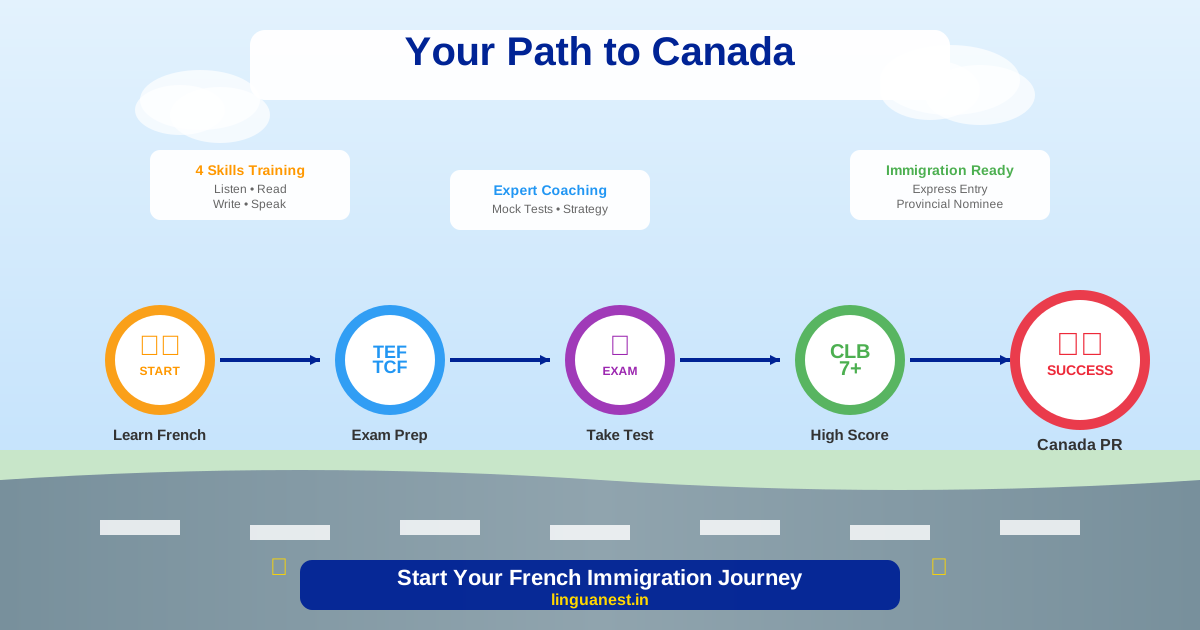
At LinguaNest, we understand that preparing for French immigration exams involves more than just language learning—it’s about strategic preparation that maximizes your immigration prospects.
Our comprehensive French language courses are specifically designed for students targeting TEF Canada and TCF Canada. We offer:
Expert Instructors: Our teachers are experienced in French immigration requirements and have helped hundreds of students achieve their desired CLB scores.
Flexible Learning Options: Whether you prefer intensive weekend classes, weekday evening sessions, or self-paced online learning, we accommodate your schedule.
Customized Curriculum: Our courses focus on exam-specific skills, ensuring every lesson directly contributes to your test performance.
Regular Mock Tests: Experience real exam conditions with our comprehensive practice tests, complete with detailed performance analysis and personalized improvement recommendations.
Speaking and Writing Feedback: Special focus on individual feedback—the areas where most students need the most support.
Contact LinguaNest today and transform your French proficiency into a Canadian opportunity!
Frequently Asked Questions (FAQs)
Q. Which is easier, TEF Canada or TCF Canada?
A. Neither exam is objectively easier—it depends on your personal strengths. If you excel at multiple-choice questions and prefer structured formats, TCF might feel more manageable. If you’re confident in expressing yourself through open-ended responses, TEF could suit you better.
Q. How long does it take to prepare for TEF Canada?
A. Preparation time varies based on your current French level. Complete beginners typically need 6-12 months of intensive study to reach CLB 7. Intermediate learners might require 3-6 months of focused exam preparation. Advanced speakers often need 4-8 weeks to familiarize themselves with the exam format and polish their skills.
Q. Can I take both TEF and TCF?
A. Yes, you can take both exams, and some candidates do so to maximize their chances of achieving their desired CLB scores. However, each exam requires a separate fee and preparation.
Q. How are TEF and TCF scores converted to CLB?
A. IRCC provides official conversion tables that map TEF and TCF scores to Canadian Language Benchmark levels. These tables are available on the IRCC website.