
Master Japanese adjectives & conjugation of verbs. Learn i-adjectives, na-adjectives & verb patterns with LinguaNest’s guide.
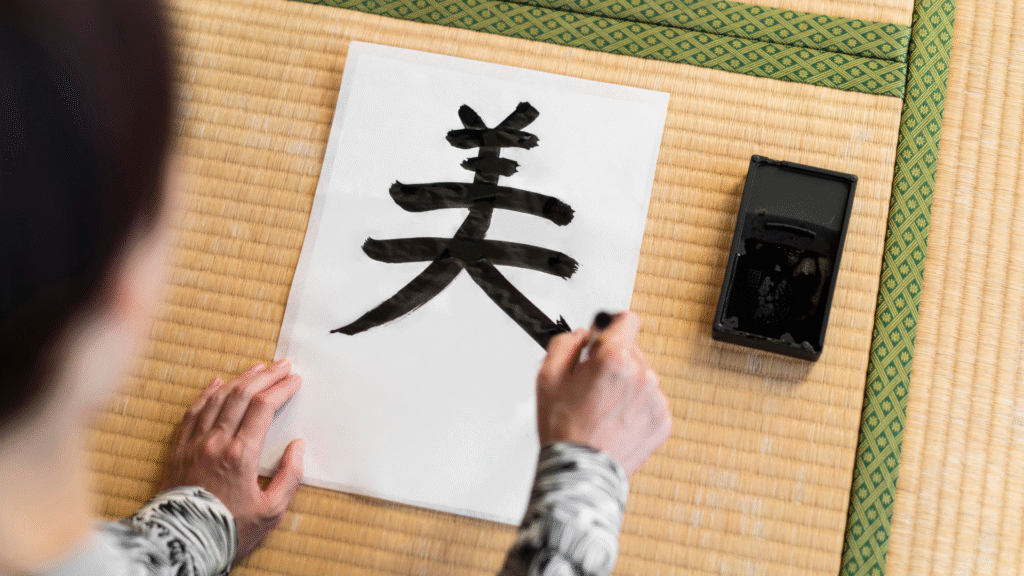
Learning Japanese grammar rules can be made simpler by understanding adjectives and how to conjugate adjectives. Grasping the concept of adjectives can play a significant role in mastering Japanese correctly. Not only do we assist you at LinguaNest.in in understanding Japanese grammar, but also acquire fluency in Japanese and various foreign languages.
Understanding Japanese Adjectives
Japanese has two different categories of adjectives, namely the i-adjective (い-adjective) and the na-adjective (な-adjective), each with their own set of unique conjugations.
I-Adjectives (い-adjectives)
I-adjectives are consistently ended with the hiragana letter い (i). They are quite flexible since they can be conjugated without the help of auxiliary verbs.
Affirmative Form As
The current positive form is the dictionary form of the adjective.
Examples:
高い (takai) – expensive/tall → 高いです (takai desu) – is expensive/tall
美しい (utsukushii) – beautiful → 美しいです (utsukushii desu) – is beautiful
面白い (omoshiroi) – interesting → 面白いです (omoshiroi desu) – is interesting
Past Affirmative Form
To form the past tense, remove the final いand append かった (katta).
Examples:
高い (takai) → 高かった (takakatta) → 高かったです (takakatta desu) – was expensive/tall
美しい (utsukushii) → 美しかった (utsukushikatta) → 美しかったです (utsukushikatta desu) – was beautiful
面白い (omoshiroi) → 面白かった (omoshirokatta) → 面白かったです (omoshirokatta desu) – was interesting
Present Negative Form
Remove the final い and add くない (kunai) for the negative form.
Examples:
高い (takai) → 高くない (takakunai) → 高くないです (takakunai desu) – is not expensive/tall
美しい (utsukushii) → 美しくない (utsukushikunai) → 美しくないです (utsukushikunai desu) – is not beautiful
面白い (omoshiroi) → 面白くない (omoshirokunai) → 面白くないです (omoshirokunai desu) – is not interesting
Past Negative Form
To form the past negative, drop the final い and add くなかった (kunakatta).
Examples:
高い (takai) → 高くなかった (takakunakatta) → 高くなかったです (takakunakatta desu) – was not expensive/tall
美しい (utsukushii) → 美しくなかった (utsukushikunakatta) → 美しくなかったです (utsukushikunakatta desu) – was not beautiful
面白い (omoshiroi) → 面白くなかった (omoshirokunakatta) → 面白くなかったです (omoshirokunakatta desu) – was not interesting
Na-Adjectives (な-adjectives) and Their Conjugation
Na-adjectives are linked to the particle “na” when functioning as direct modifiers. Conjugation for these adjectives takes place with the use of the copula “です” (desu) and follows the same rules as
Present Affirmative Form
The na-adjectives employ です (desu) for the present form.
Examples:
静か (shizuka) – quiet → 静かです (shizuka desu) – is quiet
便利 (benri) – convenient → 便利です (benri desu) – is convenient
有名 (yuumei) – famous → 有名です (yuumei desu) – is famous
Past Affirmative Form
Replace です with でした (deshita) for the past tense.
Examples:
静か (shizuka) → 静かでした (shizuka deshita) – was quiet
便利 (benri) → 便利でした (benri deshita) – was convenient
有名 (yuumei) → 有名でした (yuumei deshita) – was famous
Present Negative Form
Use じゃないです (janai desu) or ではありません (dewa arimasen) for the negative form.
Examples:
静か (shizuka) → 静かじゃないです (shizuka janai desu) – is not quiet
便利 (benri) → 便利じゃないです (benri janai desu) – is not convenient
有名 (yuumei) → 有名じゃないです (yuumei janai desu) – is not famous
Past Negative Form
Use じゃなかったです (janakatta desu) or ではありませんでした (dewa arimasen deshita).
Examples:
静か (shizuka) → 静かじゃなかったです (shizuka janakatta desu) – was not quiet
便利 (benri) → 便利じゃなかったです (benri janakatta desu) – was not convenient
有名 (yuumei) → 有名じゃなかったです (yuumei janakatta desu) – was not famous
Master Japanese at LinguaNest
At LinguaNest.in, we have language courses for French, German, Russian, and English, in addition to the Japanese language courses available on the website. Are you ready to conquer Japanese adjectives and take your language skills to the next level?
Visit linguanest.in today and embark on the path to becoming fluent! Understanding adjective conjugation is the key to expressing yourself fluently in the Japanese language.